documentary

Disappearing History
By |2026-04-15T12:36:59+01:00December 6th, 2025|Categories: Blog, The Test Strip Photoblog|Tags: , , , , , , |

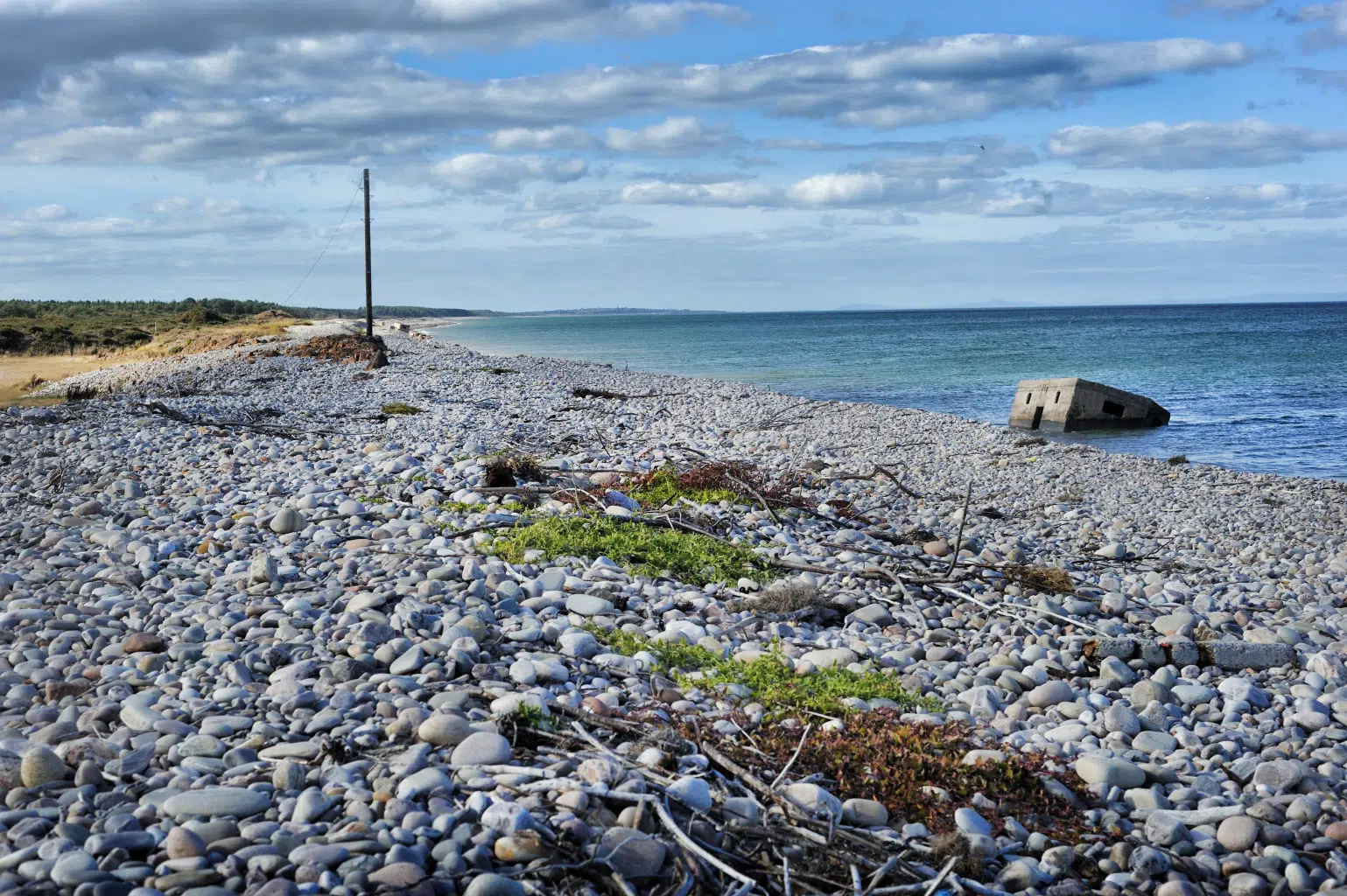
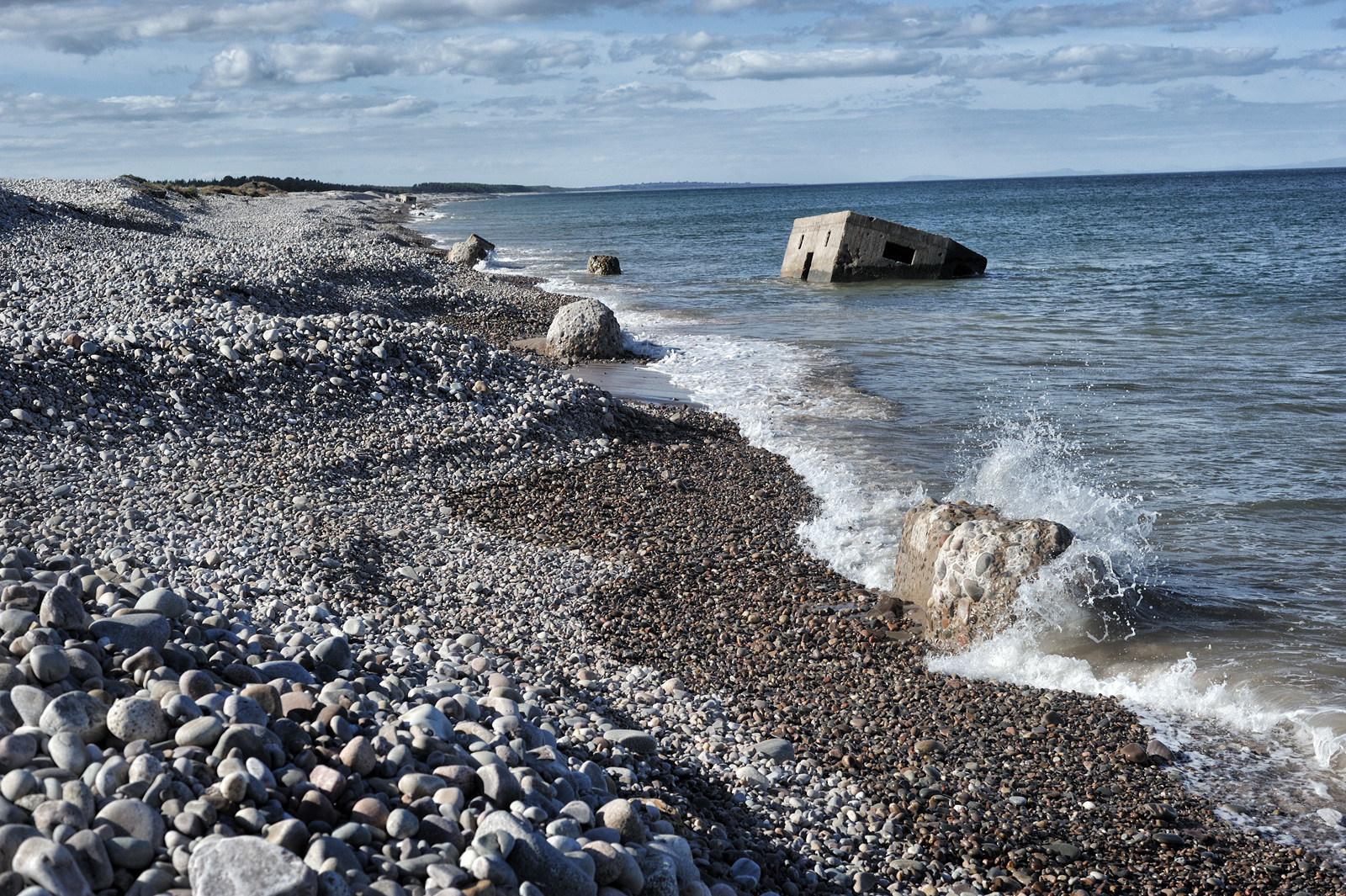
Disappearing History - A World War Two pillbox partially submerged due to coastal erosion
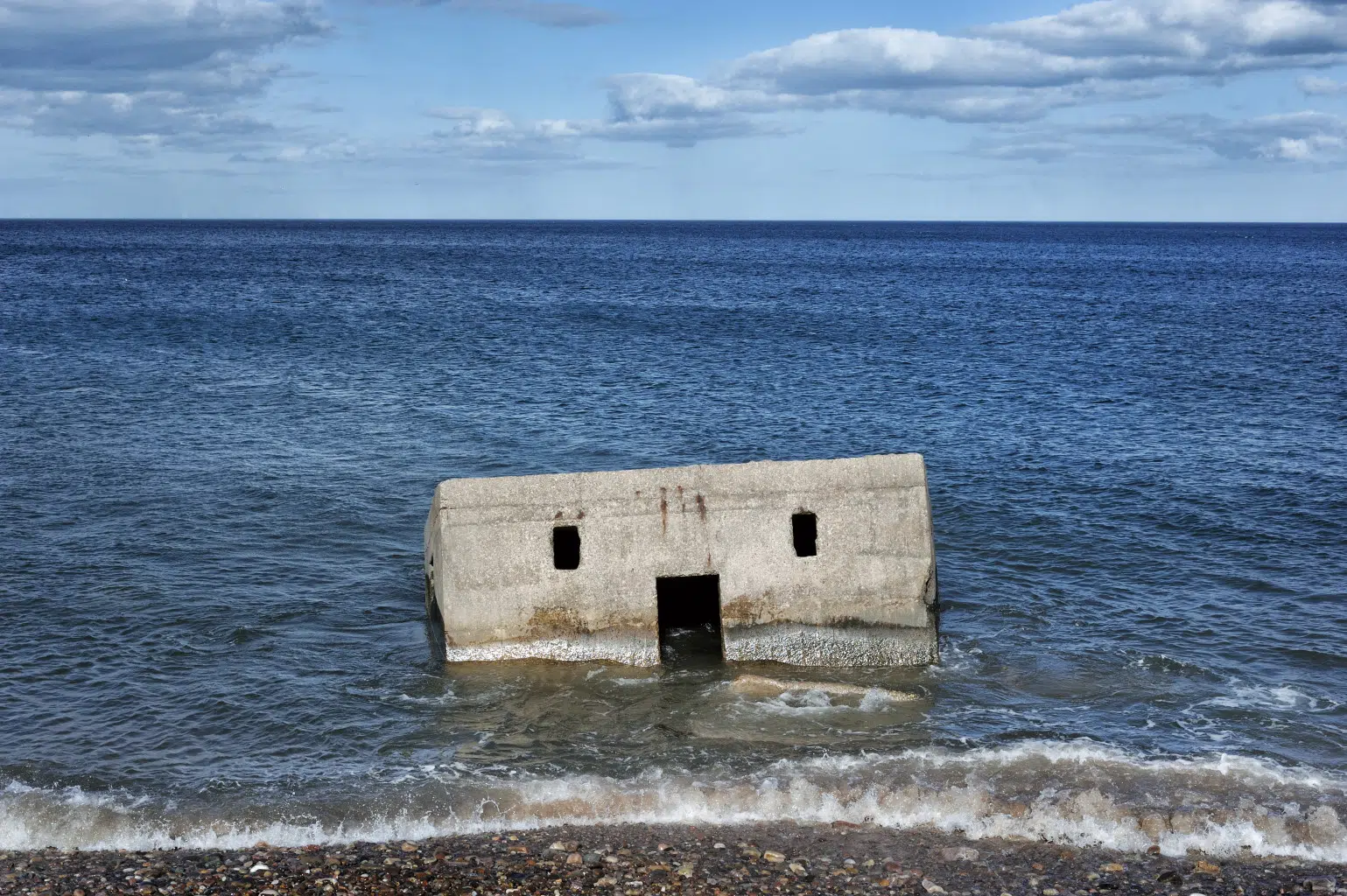
A World War Two pillbox partially submerged due to coastal erosion – near Garmouth, Moray, Scotland

Photographer’s Instinct

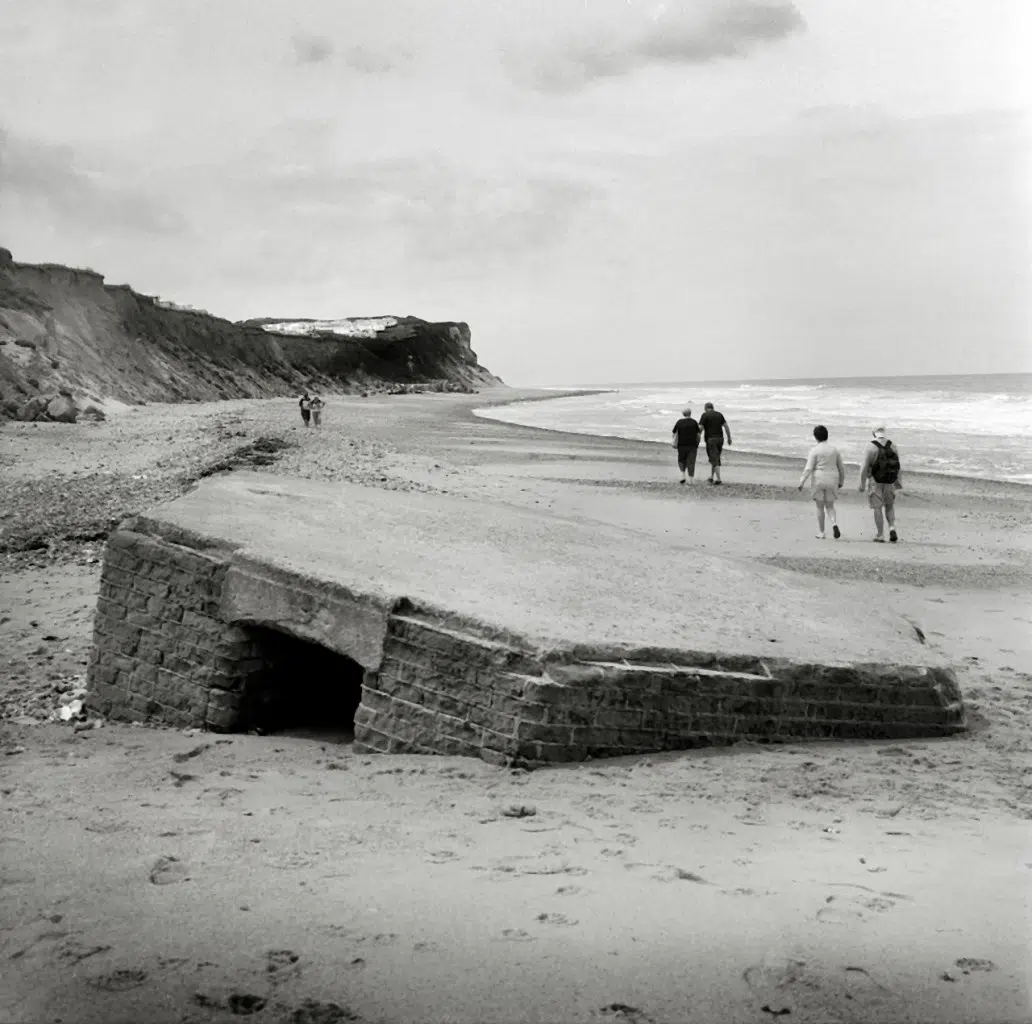
World War 2 pillbox located on the beach between Cromer and East Runton in Norfolk, UK
Pillbox on the beach between Cromer and East Runton, Norfolk, 2009

It’s been a bit of a slightly turbulent end to the year with a dose of flu interfering with a visit to Scotland. Even when in the grip of the flu, the instinct for getting photograph pushed its way through regardless of how I felt. Sometimes a location just draws you to it. So though I wasn’t feeling too great because of the bad flu I’d picked up a week earlier, nothing was going to stop me from investigating further along the shore.

Type 24 Pillbox

In this case, it was the sight of a partially submerged World War Two fortification, (the Type 24 pillbox, one of the most common in the UK, was part of the beach defences for the Scottish Command Line on Scottish beaches identified as potential landing grounds for a German invasion) slowly slipping into the sea due to coastal erosion. There was something slightly sad and yet inevitable about the whole scene which you don’t have to go far in the UK to find.

I’d spotted the pillbox as I’d walked along the beach and instantly the photographer’s instinct to investigate kicked in. It wasn’t to much of a walk but the pebble beach made the footing underneath precarious at times, especially when you aren’t running at 100% efficiency. From a distance, and even upon getting closer, the concrete structure looked like an old 1950’s sci-fi movie robot starting to emerge from the waves.

Norfolk Pillbox

Many years ago, I photographed a pillbox (a type 22 I think?) located on the beach between Cromer and East Runton in Norfolk. The structure had originally been located on the clifftop, but the sea had eroded away the cliff and the pillbox had dropped to the beach below. Another pillbox image was taken at Weybourne with the pillbox located in a field. That image can be found in the Norfolk project gallery.

I photographed the Cromer pillbox again in 2016 and, although the sand had covered more of it, the old beach defence structure didn’t appear to have moved much. I’ve no idea how the old pillbox has faired against the elements since. I couldn’t find it on Google maps but the beach was half covered in shadow. Maybe the sand has completely covered it.
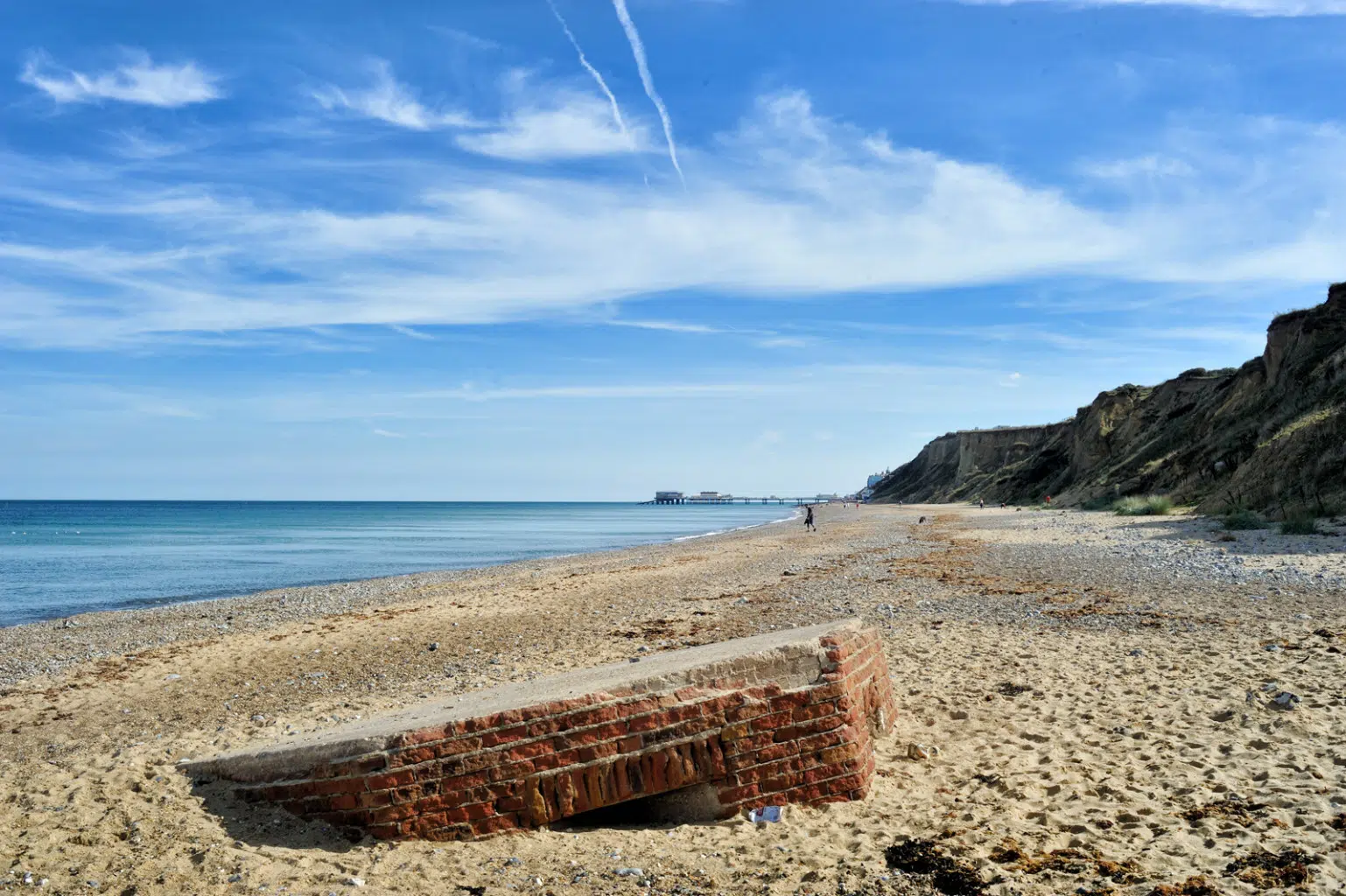
The pillbox near Cromer in Norfolk photographed in 2016
The pillbox near Cromer photographed in 2016

Beach Defence Monument

World War Two is starting to feel like distant history now. As someone who grew up with grandparents who had been through World War Two, it felt close enough to touch. These pillboxes are monuments to that history. Sadly many of them are are still in a fight with the sea, one that they will eventually lose.

So why were the beach defences there? They would have been constructed during the early years of the war when an invasion from France, or in Scotland’s case German occupied Norway, was thought possible. Norfolk, on the east coast of England with wide flat beaches, was the closest to Germany so the defences were quickly added.

After the war, the pillboxes then began their long new role as a lasting concrete monument to the conflict. Hopefully the pillboxes will continue to endure the winter storms and rough seas, keeping their structures above the waves, and remaining a monument to WWII history, for a few more years yet.

Two Towns, Ten Years Later

By |2026-04-20T07:51:30+01:00November 27th, 2025|Categories: News|Tags: , , , , , , |

Two Towns, Ten Years Later.

Behind the Lens

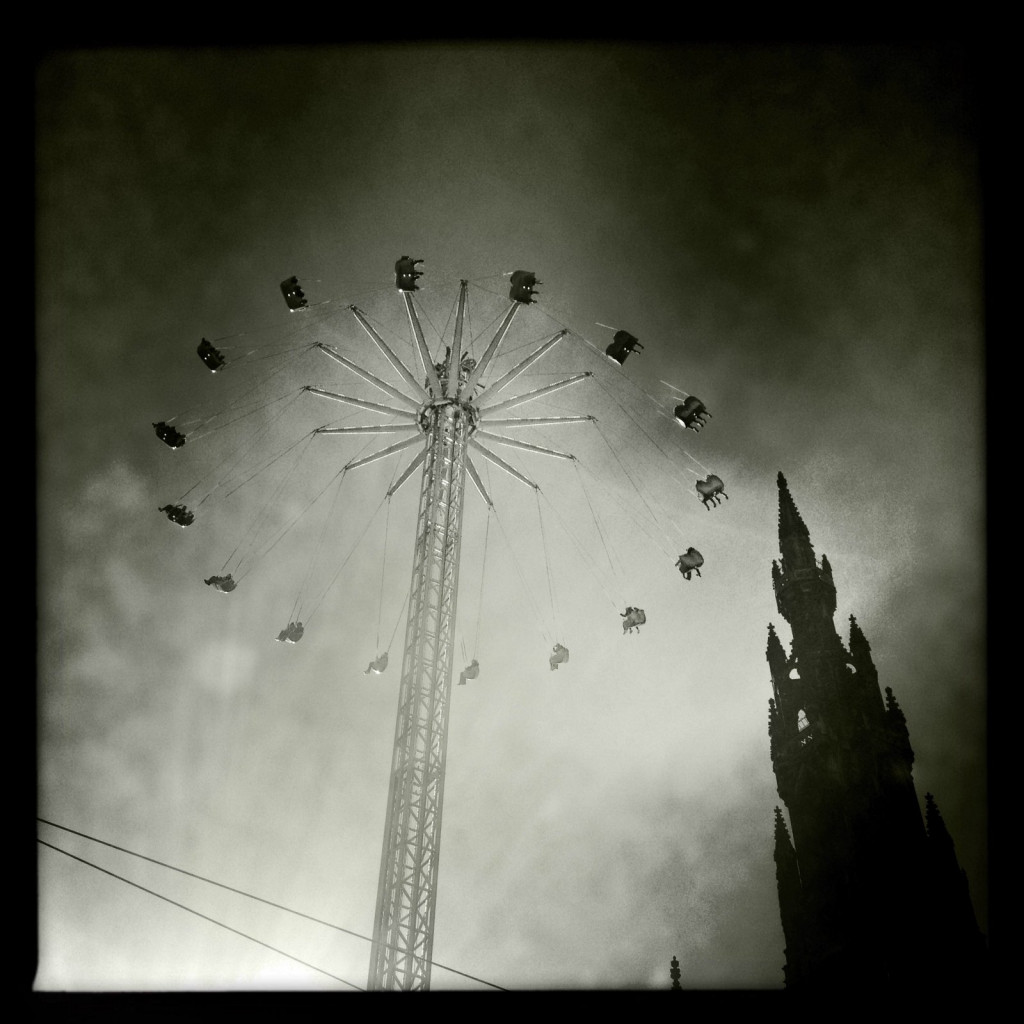
One of the more interesting, if slightly disconcerting, aspects of photography as you get older is the anniversaries of projects or just images that come along. It is a strange blend of nostalgia and disbelief that so many years have gone. And yet here I am writing another post to celebrate an old project. In the case it is the The Two Towns iPhone photography project shot in Edinburgh in November 2015.

Considering that the photography largely came about without a big plan, the project has a special place in my heart. Little did I know it, but it would document the last elements of a life with both of my parents. Within just over a year, I’d lost my mother to cancer and things wouldn’t be the same anymore. Old life and new life. Old town and New town. The images reflect both aspects of change; in front of the lens and behind it.

Onto the Page

The next book will take the images from the project and create a book detailing the photography. Originally the book was supposed to come out for the tenth anniversary with the page layouts completed and the photographs all in place. The only thing left to add is the text which I always find the hardest element to add to any book. The words need to flow correctly and reflect my thoughts about a very personal project.

An addition I’m considering is adding some of the colour images to the book to make The Two Towns a ‘definitive edition’ of the project with everything there right from the start. I’ll have to see that that works and maybe it will only be a small selection of colour work makes it into the book, but it is worth experimenting with the images and the book format.

Ten Years After

The plan is to finally get the book put together and released within the next six months. Once finished, It will complete a trilogy of iPhone photography books that started with the release of ‘Sea, Sand, Sky and Street’ way back in 2011. Looking back, I enjoyed the experimentation with iPhone photography and the resulting projects. As with the other books, it’s a snapshot of a time with a new technology producing new opportunities to create images easily without being too noticeable.

This project was great to shoot, but has been a challenge to put together in book form. Ironically the photography page layouts came together quickly. The text, and what I want to say, has not. I will, however, eventually find the words to complete the book and , who knows, may even find some closure of the events that followed on from that fantastic week long Edinburgh

Southerly Point Photozine Released

By |2026-04-15T12:27:56+01:00July 24th, 2025|Categories: News|Tags: , , , , , , |

Southerly Point Photozine Released

New Photo Book Release

It’s finally arrived. I’m pleased to announce that Southerly Point photo zine is now available to purchase via my Blurb store The book is described as

‘A collection of forty images shot around the Mull of Galloway in May 2021.The Mull is the most southerly point of Scotland with views over to Scotland, north west England, the Isle of Man and Ireland. The Mull of Galloway lighthouse was established in 1830 and engineered by Robert Stevenson. Also included are documentary and landscape photographs shot around the nearby Rhinns of Galloway at locations including Port Logan, Portpatrick and Killantringham”.

New Photo Book Link

The book can be purchased at https://www.blurb.co.uk/b/12497265-southerly-point-the-mull-of-galloway

Lone Horse Landscape

By |2026-04-20T07:54:50+01:00April 15th, 2025|Categories: Blog, The Test Strip Photoblog|Tags: , , , , , , |

A lone white horse in a field near Hassendean in the Scottish Borders
A lone white horse at Hassendean, Scottish Borders

One White Horse

Here’s another image from a recent stay near Hawick in the Scottish Borders. The image was taken during a rather long walk and explore. So far I’ve been really pleased with the black and white images produced so far. The shot of the white (maybe a bit grey too) horse was a quick photography moment. A fast grab or lose it. With the 50mm lens being close to the focal length of the human eye, it was easy to frame and get the shot within seconds. It certainly lived up to the ‘nifty fifty’ name.

the front of a Pentax Super A 35mm film camera with a 50mm lens
Image by Yaskin Nikita – CC BY-SA 4.0

Nifty Fifty

Before Christmas I replaced an old 50mm lens that, quite honestly, never really worked properly. Over the years I’ve blamed camera metering but it seems like the real fault was a sticky aperture blades, made all the more difficult to identify a fault by its intermittent appearance. Wort of all, I suspect that the problem was always there right from purchasing the lens new.

The new lens has reminded me of the love I’ve always had for the 50mm. Simple, fast and light to carry, the 50mm standard lens has always been in my camera bag since my distant Pentax owning student days. Zoom lenses are great but I’d always recommend having a 50mm tucked away somewhere in the camera bag.

Scottish Border Prints on RedBubble

A number of the photographs from the Scottish Borders are now available via RedBubble as both monochrome and colour editions.

If you would like to purchase a print of one of the photographs, the Richard Flint Photography RedBubble store has a wide range of images available.

Framed prints, canvas prints, art boards, metal prints, acrylic blocks plus lots more can be found on the RedBubble store HERE.

Subscribe to Website News via Email

Enter your email address to subscribe to this website and receive notifications of new posts by email.

Follow Me on Social Media

Recent RFP News Posts