

Disappearing History
Photographer’s Instinct
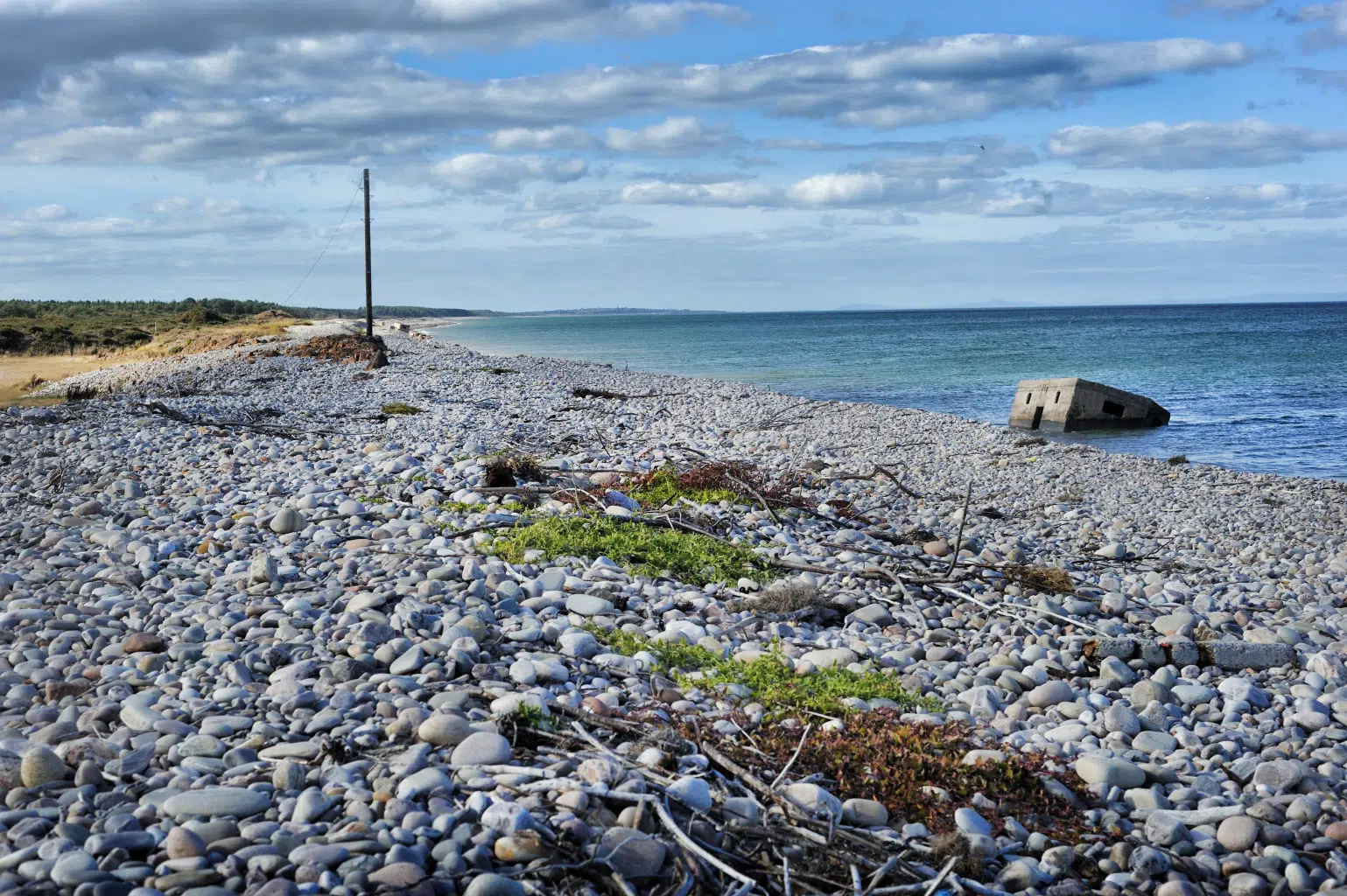
It’s been a bit of a slightly turbulent end to the year with a dose of flu interfering with a visit to Scotland. Even when in the grip of the flu, the instinct for getting photograph pushed its way through regardless of how I felt. Sometimes a location just draws you to it. So though I wasn’t feeling too great because of the bad flu I’d picked up a week earlier, nothing was going to stop me from investigating further along the shore.
Type 24 Pillbox
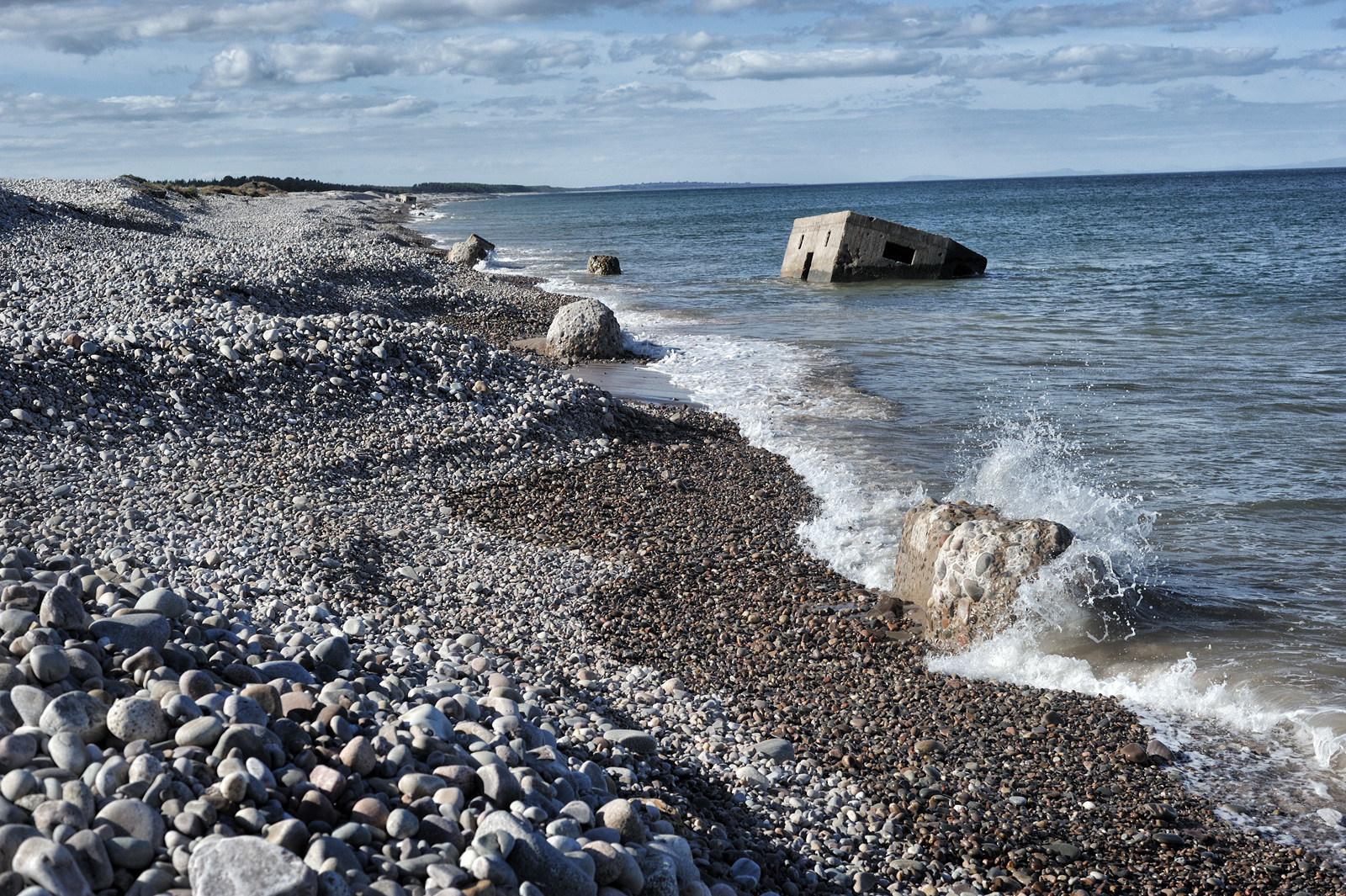
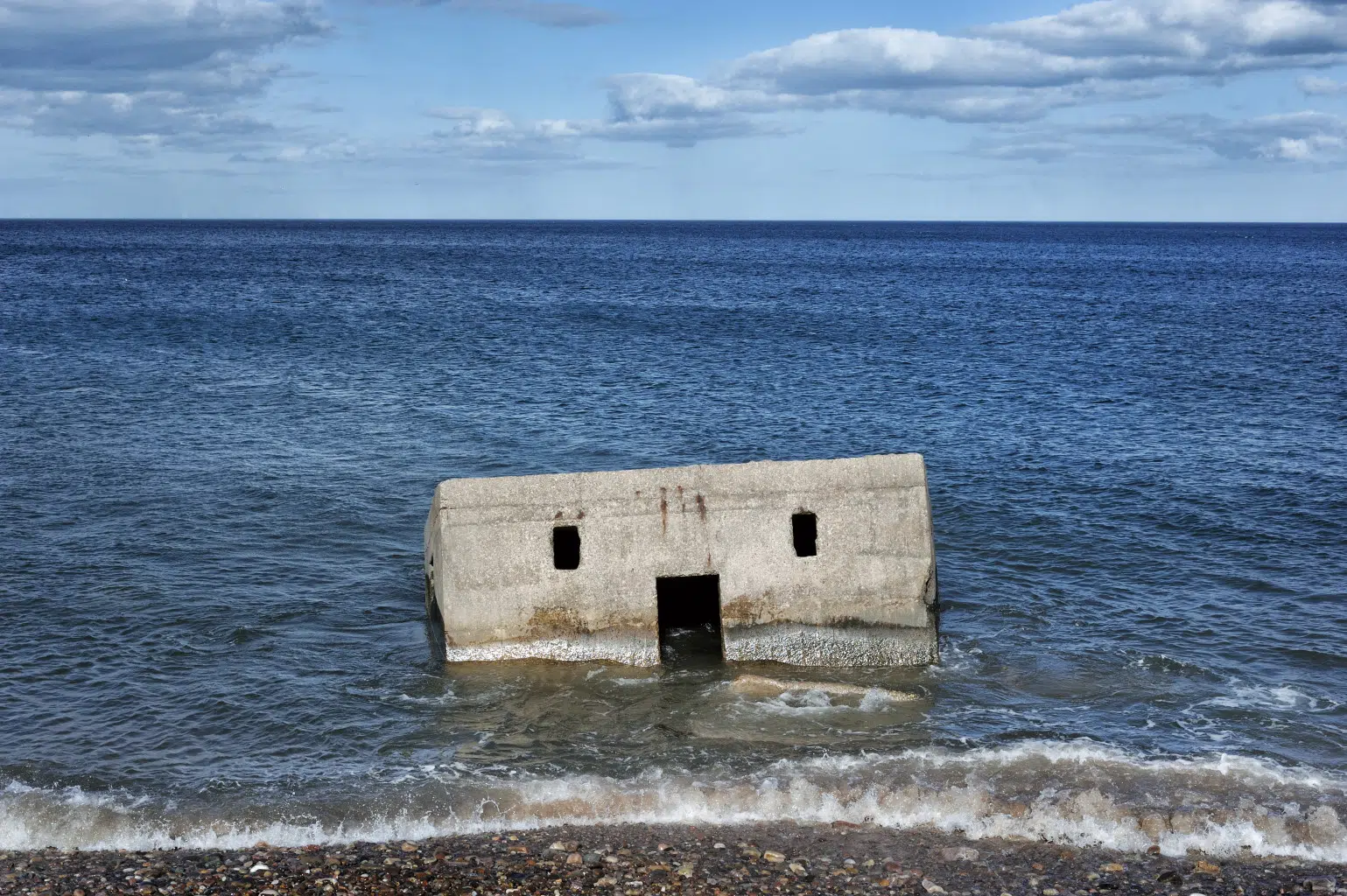
In this case, it was the sight of a partially submerged World War Two fortification, (the Type 24 pillbox, one of the most common in the UK, was part of the beach defences for the Scottish Command Line on Scottish beaches identified as potential landing grounds for a German invasion) slowly slipping into the sea due to coastal erosion. There was something slightly sad and yet inevitable about the whole scene which you don’t have to go far in the UK to find.
I’d spotted the pillbox as I’d walked along the beach and instantly the photographer’s instinct to investigate kicked in. It wasn’t to much of a walk but the pebble beach made the footing underneath precarious at times, especially when you aren’t running at 100% efficiency. From a distance, and even upon getting closer, the concrete structure looked like an old 1950’s sci-fi movie robot starting to emerge from the waves.
Norfolk Pillbox
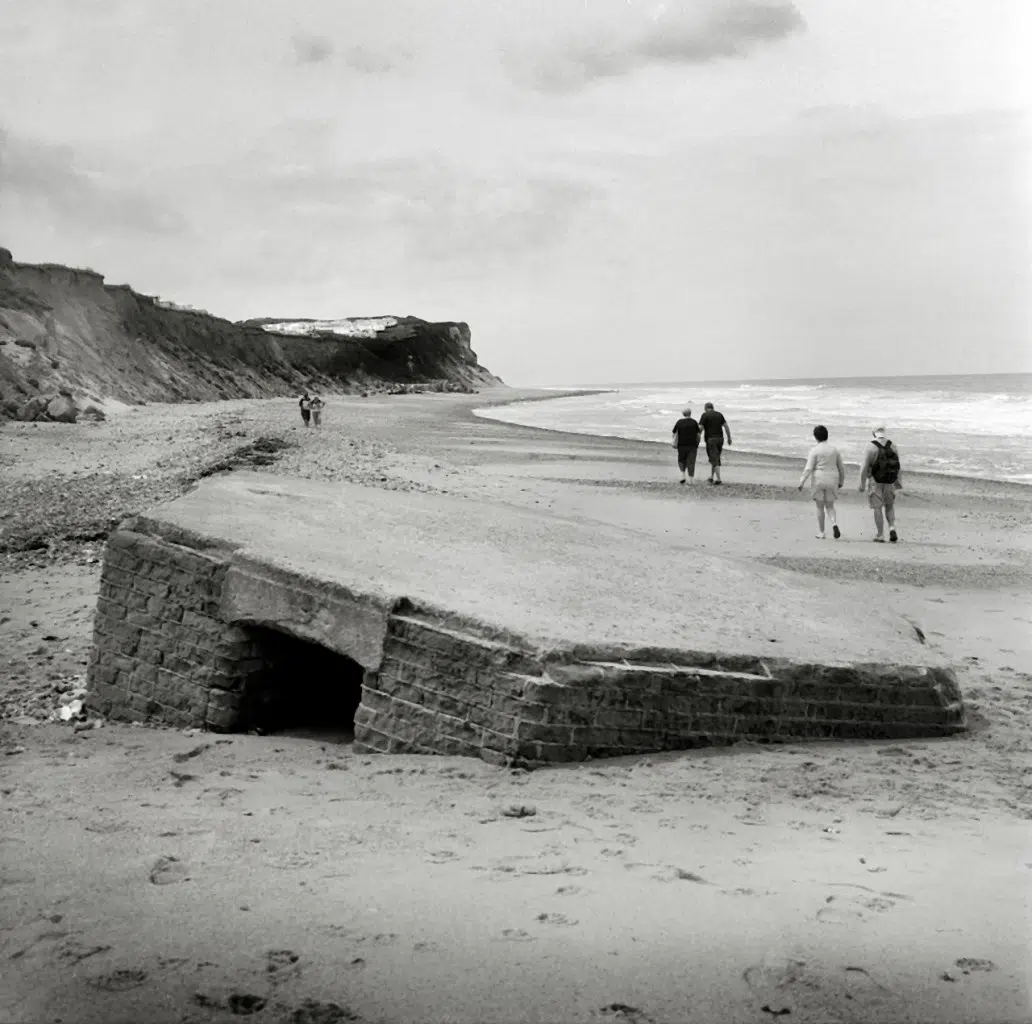
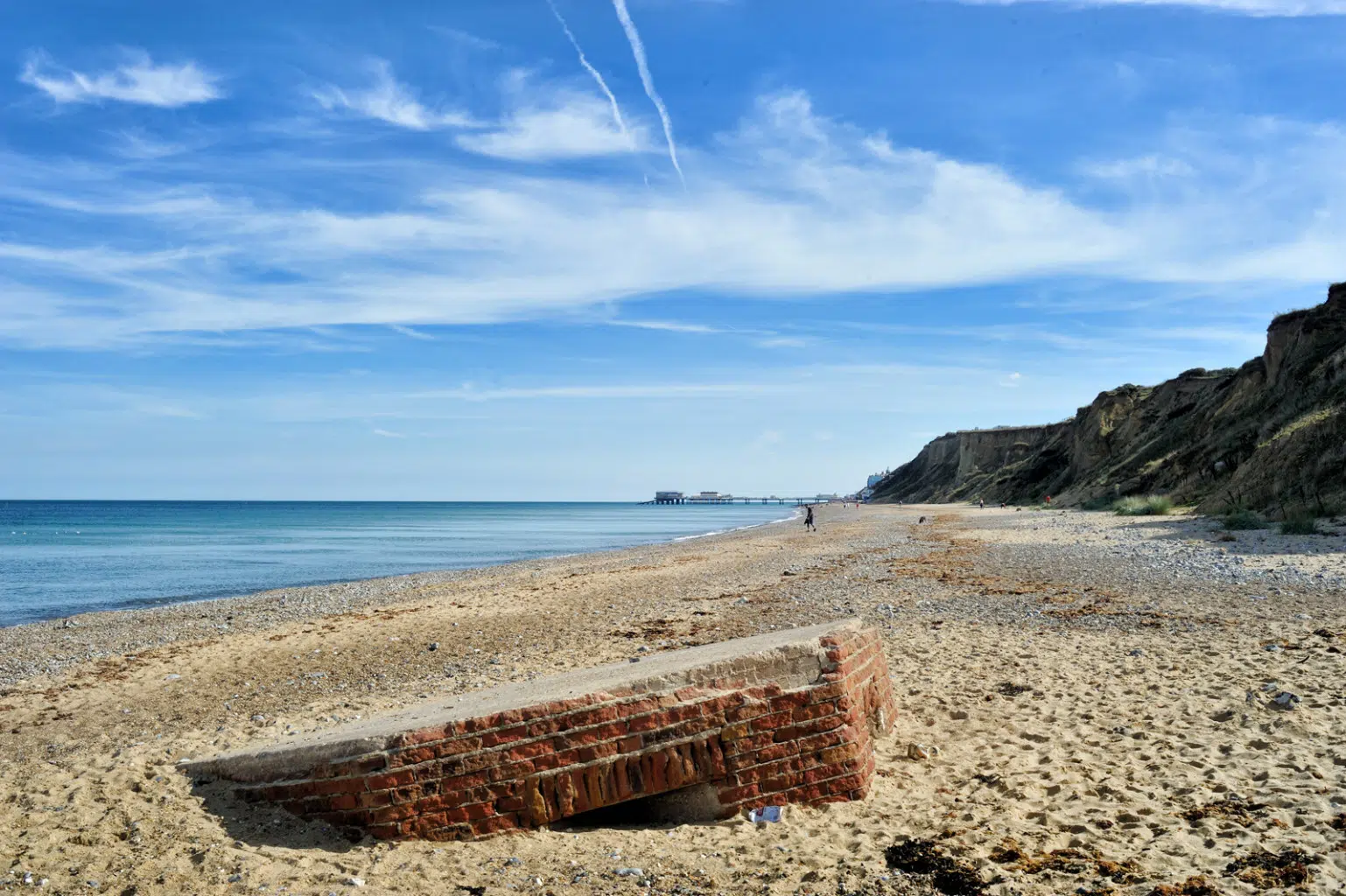
Many years ago, I photographed a pillbox (a type 22 I think?) located on the beach between Cromer and East Runton in Norfolk. The structure had originally been located on the clifftop, but the sea had eroded away the cliff and the pillbox had dropped to the beach below. Another pillbox image was taken at Weybourne with the pillbox located in a field. That image can be found in the Norfolk project gallery.
I photographed the Cromer pillbox again in 2016 and, although the sand had covered more of it, the old beach defence structure didn’t appear to have moved much. I’ve no idea how the old pillbox has faired against the elements since. I couldn’t find it on Google maps but the beach was half covered in shadow. Maybe the sand has completely covered it.
Beach Defence Monument
World War Two is starting to feel like distant history now. As someone who grew up with grandparents who had been through World War Two, it felt close enough to touch. These pillboxes are monuments to that history. Sadly many of them are are still in a fight with the sea, one that they will eventually lose.
So why were the beach defences there? They would have been constructed during the early years of the war when an invasion from France, or in Scotland’s case German occupied Norway, was thought possible. Norfolk, on the east coast of England with wide flat beaches, was the closest to Germany so the defences were quickly added.
After the war, the pillboxes then began their long new role as a lasting concrete monument to the conflict. Hopefully the pillboxes will continue to endure the winter storms and rough seas, keeping their structures above the waves, and remaining a monument to WWII history, for a few more years yet.